Category: Uncategorized

  • The Complete Guide to 2025 Marketing Strategy Planning

    The Complete Guide to 2025 Marketing Strategy Planning

    Looking to Craft a Killer Marketing Strategy for 2025?

    Curtis and I kicked off Season 2 of the Bullhorns and Bullseyes podcast by going live (originally airing December 18, 2024), during which we covered a range of topics with both curiosity and analysis alike.

    Appropriately, we opened the show talking about the importance of authenticity when it comes to branding and marketing. (You know…like, going live and in-person in real time?)

    We did our best to cover the relevant bases, fielded some live questions, and tried to tee listeners up to hit a home run when developing their 2025 marketing plans!

    Topics Covered:

      • The Shift to Authenticity: Why Gen Z rejects traditional advertising

      • The Power of Video Marketing: Tips for creating authentic video content

      • LinkedIn Newsletters: Building engagement from new audiences

      • Chatbots: Personalized or AI-powered?

      • Smarter Attribution: Navigating privacy and complex customer journeys

    Watch, Listen + Subscribe:

    Watch the video below. Or find the episode on the podcasting platform of your choice. While you’re at it, don’t forget to subscribe to both the podcast and our YouTube channel so you never miss an episode!

    Happy 2025 planning, marketers!

    👉

  • From the Archive: July 2009

    From the Archive: July 2009

    11 Things a Failed Music Career Taught Me About Marketing

    I often think about a blog post I wrote in July of 2009, realizing just how accurate it turned out to be with each passing year.

    One might say that chasing a dream of being an international rock star for four years following college was a lesson learned on how not to start a career. But I still point to those days as the foundation for everything I would come to learn about building a brand, attracting an audience, and selling a product.

    So, here reprinted in its original form, is that original blog post, first published July 27th, 2009 (please forgive all that is now out-of-date by today’s standards):

    Lessons Learned Are Often Timeless. Like These…

    It might be hard to believe looking at me now, but a full-time music career and pursuit of rock-and-roll stardom preceded my foray into marketing and public relations. That’s me up there on the left…looking too cool for school. Oh, my. The hair. All that glorious hair!

    But what I learned as a starving artist back in the early 90s taught me the basics of nearly everything I do today as a marcom professional. In order for us to survive, it was all about promotion…and I mean, literally, “survive.” Here, then, are the 11 lessons I look back on and draw upon even today (musicians always “go to 11”):

    1.) Video killed the radio star. The birth of MTV in the early 80s totally reshaped the music industry. Video gave adoring fans instant access to the personalities behind the music, and labels had to rethink the way they packaged their artists. It was not enough to sound good anymore, you had to visually appeal to your fans, and give them a side of you the music couldn’t otherwise convey. Brands and B2B marketers need to do the same. Video conveys personality, passion and persona far better than the written word, yet many businesses are slow to leverage the power of what can be extremely affordable video communications.

    2.) Nothing travels faster than word of mouth. Good or bad, word of mouth will travel faster than your ability to control the message. If your band had a lousy live performance, people would scorch you. If you rocked live, your following would quickly grow. The same goes for social media today. People are talking about brands all day on social media. Are you listening? Are you engaging with the conversants? Are you keeping up with word of mouth?

    3.) Publicity is platinum. Record reviews, live show write-ups and artist profiles were invaluable to the indie artist (in an era before the emergence of social media). Get your band in the press, and you would gain instant credibility and raised recognition. No one needed to know that you as the artist peddled your CD around with free pizzas to get access to the reporter…and no one needs to know a PR firm is behind the scenes generating your company’s publicity today.

    4.) Constant contact. Third-party and indirect communications are clever and vital, and all…but never discard the power of direct communications. Back then, it was the periodic mailing with upcoming tour dates, sent via postcard to our database. Today, this can take many forms, from e-blasts and newsletters to compelling print communications artfully designed and packaged…all of which will serve to keep your company top-of-mind among current and prospective customers.

    5.) You’re nothing without a database. Pursuant to the above, you simply MUST maintain a current database of vital contacts, including customers, prospects, referral sources, vendors, associates and friends of the firm. It sounds simple and self-evident, but you’d be shocked how many companies we talk to who have absolutely no database established. This is like planning a concert and not telling anyone about it. Or sending out a show announcement without mailing labels. (I would know…my keyboardist tried it once.)

    6.) Advertising works. That is, if you have a measurable call to action. (Image advertising also works, but is a lot more difficult to measure.) The grunt work of being in a band performing at college towns in the early 90s included the exhaustive process of “flyering the gig.” This meant illegally adorning every tree, streetlight, kiosk and powerline pole on campus with flyers promoting the gig at the local bar. How did we know they work? On the flyers, we asked people to mention the “free shots” at the bar upon arrival. The bar owner didn’t care much for the tactic, but we knew the flyers were working.

    7.) Your fans will do your bidding for you. If truly engaged, your fans become your greatest asset. They aren’t afraid to tell their friends how awesome your band is, but you might be. Brands, by the same token, need to empower their “fans.” Give them a place to gather (social media communities like Facebook and LinkedIn), let them engage with you so that they feel like part of a movement (Twitter and other social media), give them tools to spread the word on your behalf (sharable content on your Web site and public content communities such as SlideShare, YouTube and Flickr). Most small companies today ignore social media as a marketing strategy. Big mistake.

    8.) If you can’t get signed, put out your own CD. The barrier to entry for a local band was the ever-elusive record contract. Without it, no one could get to the music, at least not on a large scale. So many local bands simply recorded their own CDs, distributed them independently, and grew their followings organically. Today, companies perceive a barrier to mass communications being the difficulty in engaging a mass media outlet to spread the word about an event or other news story. But content communities like YouTube, Flickr…and the sheer breadth of the Internet’s reach allow any brand to be a mass communicator. They have the option of simply creating the content themselves and using the available online channels to spread the word. Like the local indie artists, nothing is stopping them but their own imaginations, budgets and level of commitment.

    9.) Not all bands should toot horns. All of the marketing in the world won’t work if you’re not honest about what you’re selling. Marketing is often spin, but it can’t be spun out of control. Social media is keeping brands more and more honest these days. Keep that in mind when you’re communicating your product’s or service’s strengths to your key audiences. It’s like the band that uses studio tricks and effects to make their album sound masterfully polished…but then can’t pull it off live. You WILL get found out.

    10.) Grow your hair out and wear second-hand clothes. Brands need to be known for something—big brands and small businesses alike. In music-artist terms, you need to have an “image.” Do some in-depth soul searching to discover what yours is—and what you want it to be—then carefully craft that message for all to behold. Preach that message internally, and live it always externally. Be consistent, and be recognizable.

    11.) Have fun. Life’s too short to sweat the small stuff. In other words, “Rock on!”

    (For those who are interested, and for those who don’t believe me, see more about the band that was here.)

  • A Messaging Parable

    A Messaging Parable

    Stop me if you’ve heard this one before:

    A product innovator walks into an advertising agency…

    He’s invented the best hammer to ever hit the market. Now he needs the agency’s help to tell the world all about it.

    “What makes this hammer so special?” the creative director asks.

    “Just look at it,” the proprietor beams with pride. “It’s a work of art.”

    “Why would anyone buy it?” the agency lead asks.

    “Because!” the proud tool wielder interjects, “it is made of state-of-the-art titanium. Its ergonomic, padded grip is like nothing the market has ever seen before. And the reinforced hammer face is so durable, we guarantee it for life!”

    “Interesting,” the creative director observes. “Can we talk to someone who’s bought one?”

    “Sure! Here is our happiest customer,” he quickly obliges, handing the CD the customer’s contact information. “He’ll tell you all about it. The strength, the light-weight design, the innovative handle, the power and speed. If we can get all of that into the advertising and website, this thing is sure to fly off the shelf!”

    The creative director schedules a phone call with the satisfied customer. They chat. He begins…

    “Tell me, sir, why did you buy this hammer?”

    A grin forms on the customer’s face. That’s when the creative director knows he’s going to get to the heart of the customer journey. The trigger. The inflection point. The one to capture in the messaging and marketing. And, sure enough, he gets it…

    “Because,” the customer explains, “I wanted to build a treehouse to spend more quality time with my kids.”

    💡💡💡💡💡💡💡

    So. What do you think the creative should lead with?

    Why. Not what. Not even how.

    1 —> Lead and captivate with Why.
    2 —> Support and differentiate with How.
    3 —> Validate and close with What.

    Nobody wants your what until they’re comfortable you understand their why.

    Once that emotional first connection is made on the WHY level, you can move on to selling your bigger, better, badder HOW…but not before.

    Your WHAT is essentially the same as every other hammer in the toolbox.

    The customer decides WHO. And WHY.

  • Happy Holidays

    From the Content Elves at The Creative Mill to You and Yours…

  • On Bullhorns and Bullseyes

    On Bullhorns and Bullseyes

    Announcing: A New Podcast to Help You Reach More People More Effectively

    Effective marketing programs should employ both bullhorns and bullseyes. 📢 + 🎯 = 🏆.

    Bullhorn tactics are broadcasting vehicles — tools designed to get your message and your brand in front of large audiences. Even niche audiences…but at scale.

    Bullseye tools target specific people (both personas and individuals) with precision and purpose. Even down to a discrete person or IP address.

    Bullhorns are mass communication initiatives: PR, advertising, programmatic and digital, content marketing, newsletters, etc. Thought leadership and brand positioning.

    Bullseyes are sophisticated and exacting: retargeting, tracking pixels, automation sequences that are triggered by an individual user taking a specific action. Tracking, timing and targeting.

    BOTH are required in the modern media environment, where individuals are taking very dispersed and unpredictable paths to purchases…but who also congregate in micro-communities in mass.

    Not one or the other. Both. Bullhorns + Bullseyes.

    📢 + 🎯 = 🏆

    Now Streaming: The Bullhorns and Bullseyes Podcast

    I am extremely excited to announce my latest collaboration with Curtis Hays and his Collideascope teamlance: a podcast devoted to bridging the chasm between marketing and sales, called “Bullhorns and Bullseyes.

    Join us as we explore a broad range of marketing and advertising strategies. From the art of broadcasting compelling stories and thought leadership in order to grow an audience (Bullhorns) to the science of micro-targeting and retargeting highly specific individuals and buyer personas through advanced digital marketing (Bullseyes), we explore the present and future with a curious eye and honest analysis. Join the community today to help us on our mission to close the loop between marketing activity and client/customer acquisition.

    We begin our journey with a three-leg story arc showcasing the concepts behind effectively employing the Bullhorns and Bullseyes model. Curtis and Tom are joined for Part One of a multi-chapter success story by guest Mario D’Aquila, Chief Operating Officer of Assisted Living Services, Inc. in Cheshire, Connecticut.

    In Chapter One, Mario shares his experiences and best advice on the early stages of a company’s exploration into marketing and advertising: what worked, what didn’t, and why you need to push yourself to start early in investing in your future success.

    Lesson Learned: “What was the biggest a-ha moment early on in your sales and marketing efforts?”

    Find it wherever you get your podcasts. Or stream it now, read the transcript, and even watch the video cast of all three episodes, with more on the way soon!

    📢 + 🎯 = 🏆!

  • How to Launch a Professional Podcast in Six Steps

    How to Launch a Professional Podcast in Six Steps

    If “Podcasts are the New Black for Business Development,” as has been argued, there is no time like the present for marketers of professional services to get en vogue and launch their firm’s audio thought leadership into the arena of ideas.

    Everywhere you look, research and data keep pointing to the same new reality: Decision makers are increasingly turning to audio formats to consume content and mine expertise. If your firm and its attorneys are not claiming their seats at the table, there is a good chance your competitors are.

    In all likelihood, you’ve considered embarking on a podcasting initiative for your firm, but for whatever reason — be it strategic, tactical or logistical — you haven’t completed the journey. Consider this, then, your roadmap to get from positing to podcasting … from production to promotion.

    1. Find Your Niche

    The first step is to establish and document your podcasting strategy, which begins with clearly defining your audience. While your intuition might tell you to build as large an audience as possible, our advice is to delineate your intended listenership as narrowly as possible.

    The goal (at least, realistically) is not to amass a large audience of lightly engaged, occasional listeners, but rather, a deeply engaged cadre of true fans who make your content a priority in their otherwise time-pressed lives.

    You’re not endeavoring to be the next Joe Rogan or Adam Corolla. You are trying to attract devoted fans in a narrow but deep domain of specific subject matter in which you can be positioned credibly as a true expert and thought leader. Remind yourself that this is a business development initiative, not a vanity project or popularity contest.

    Once the niche has been articulated, everything going forward becomes easier.

    It’s more intuitive to build a content calendar (because you’ll know what a very specific audience truly cares about), it will feel natural to market your podcast to more easily identifiable decision makers, and it will open doors for future syndication opportunities in target-market media outlets. If, alternatively, you try to create a platform that attempts to appeal to an ill-defined, broadly brushed and nebulous audience of “general counsel” or the like, you’ll be met with greater competition, increased user skepticism, and far more difficulty staking claim to the mantle of “thought leader.”

    2. Develop a Content Calendar

    Once you know who you’re talking to, and what that audience cares about, you’ll be able to formulate a content strategy that answers the questions your constituents grapple with professionally.

    Start by creating a list of questions you believe these individuals are asking, or what problems they are looking to solve. If you get stuck, start jotting down the questions your clients pose in meetings or via email. Chances are, if your clients are asking those questions, so are your prospects. And so, too, will your podcast audience tune in to learn about. Next, take that list and prioritize them as best you can. Your top-five are the topics of your first five episodes.

    3. Define Form and Format

    You’ll next want to outline a format and frequency to which you can reasonably commit for the foreseeable future. Things you should define before committing your valuable time and resources—so you don’t fall victim to the “podfade” phenomenon — include:

    • Format: Am I interviewing guests? Do I have a host interviewing me? Do I solo-cast? We typically caution against solo-casting, as being the lone voice on a microphone is a very uncommon skill. Typically, we encourage a conversational format, with two or more personalities casting at once—whether this is you and another attorney or you and a guest (who may be a prospect you can invite on the show!).

    • Frequency: How often can you find the time to carve out for recording an episode per month? Usually, busy professionals can at least do this monthly, but no more than weekly. Somewhere in that range, you will find the frequency that’s right for you. But, whatever you choose, stick to the commitment you’ve made to your audience!

    • Episode Architecture: Determine an intended length for each episode, and stick to that as well. Be honest about the audience you’re looking to attract, in terms of how much time that likely busy individual will be willing to spend on your podcast. In our experience, 30 minutes is a good place to start…about the same duration as a typical office commute.

    4. Get the Tech Right

    Based on how you’ve defined your podcast’s formatting (above), you’ll need to make modest investments in hardware and, possibly, software, to produce your podcast as professionally as possible. Remember, this podcast is an expression of your (and your firm’s) brand. Handle with care.

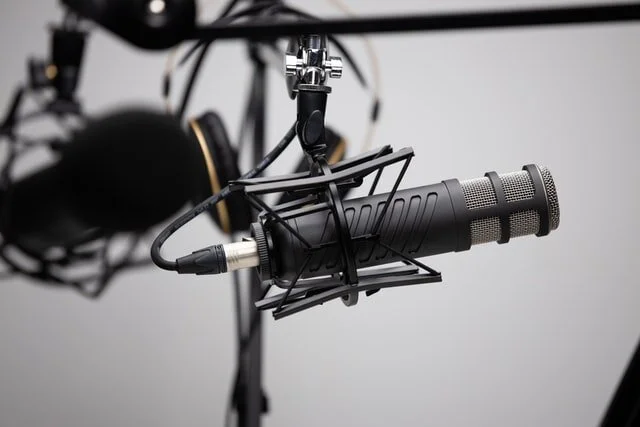
    • Microphone: Though you can find “free” ways to get audio input into editing software, we strongly encourage that podcasters purchase a good microphone. It doesn’t even have to be a professional-grade microphone used in recording studios. But for $100-200, you can find decent-sounding mics that integrate with the USB ports on your computer, or good-quality microphones you can use for live recordings (say, in a conference room setting). For our podcast, The Thought Leadership Project, we like the Blue Yeti mic, which is a compression microphone ideal for podcasting and which plugs right into your USB port.

    • Audio Interfacing: Again, depending on your formatting decisions established earlier, you will likely be interviewing guests or conducting a conversation with a co-host. If those guests are remote to your office location, you’ll want to invest in a high-quality Web conferencing software solution, such as Zoom, which allows for session recording and audio compression. If you plan to record your episodes face-to-face in a conference room location or similar, you may need to invest $100-$200 in a four- or six-channel audio mixer with USB interface capability. (I recommend starting your search at Sweetwater.)

    • Editing Software: If you’re on a Mac platform, the Garage Band software that comes on board with your computer offers more than enough editing capability to produce and publish your podcast. There are other free or low-cost options out there for non-Apple users as well, such as Audacity.

    5. Invest in the Brand

    A podcast is every bit important as any other brand asset your firm will launch into the marketplace, and should be regarded as such. In your zeal to get your podcast launched, don’t overlook the branding basics that will help to properly position and promote your podcast:

    • Naming: Not only should you ideate to come up with a unique name for your podcast that is both descriptive and alluring, you need to do some advanced planning to make sure you’re landing on something distinctive. As you create your short list of possible names, do some searching in Apple Podcasts to make sure it’s not already taken, nor that there are too many others with similar sounding names.

    • Domain: A great way to promote your podcast is to promote it as its own distinct entity, and not some obvious marketing initiative that could potentially scare away potential listeners. One way to do that is to secure and ultimately promote a domain name that markets your podcast by name, such as “The Intellectual Property Cast Dot Com,” or the like. Invest in the domain, even if you ultimately decide to map that URL to a podcast page on your firm’s website. It’s far better than directing listeners to “visit Nixon Law Dot Com, scroll to the bottom of the page, then click on Podcasts, then click on the Intellectual Property Cast,” for example.

    • Branding: You’ll also need some identity assets developed, such as a logo. Once you’ve established a visual image that matches the tone and intent of your podcast, you can deploy that brand into your podcast’s thumbnail photo (the image that appears in Apple Podcasts, etc.), and a “cover photo,” which is like a header image for your podcast in publishing directories (similar to your header image on LinkedIn or Facebook).

    6. Focus On Hosting and Syndication

    Once you’ve produced the first four to five episodes of your podcast, you can launch into the podverse. You’ll need to establish two primary properties, one for hosting and one for syndication:

    • Hosting: Your audio files will need to live somewhere — somewhere that can produce a subscription feed for the syndicators (such as Apple Podcasts and Google Play) to pull your content from as you publish it. WordPress websites can be configured with popular plugins to accommodate the hosting of a podcast, and Squarespace sites offer this capability as part of most subscription packages. Third-party hosting providers will host your podcast at no (Anchor) or little (Podbean, Soundcloud, and others) cost, as well.

    • Syndication: To get your project on the popular apps that syndicate podcasts, you will need to establish and configure accounts on Apple and Google Play. Once configured, you will connect these services to the RSS or subscription feeds where your podcast is hosted and — voila! — your podcast is available for listeners to hear, download and subscribe to. Other popular podcasting apps, such as Spotify, Stitcher, Overcast and others will automatically pick up podcasts syndicated by Apple and Google.

    You’ve Only Just Begun

    Congratulations! You’re a published podcaster! Of course, the project doesn’t end there, but rather moves on to the next chapter: promotion. You’ll want to take active steps to grow your audience in perpetuity. This includes activities like:

    • Promoting your podcast on social media, and announcing new episodes as they go live.

    • Using your firm’s existing marketing channels to gain attention for your content, such as a prominent position on the firm’s home page and regular notifications in firm emails and newsletters.

    • Finding syndication opportunities. Remember that narrowly defined audience you identified earlier? Seek out the content communities and trade media to which that audience flocks. Inquire into opportunities to have your podcasts featured or promoted via those channels. If your content is targeted to a niche and legitimately provides subject matter expertise and insights, you might be surprised how willing industry influencers are to share or even syndicate your podcast.

    • Leveraging your podcast as a business development initiative. Looking to open a dialogue with a targeted prospect that’s difficult to reach? Invite him or her to be a guest on your podcast. That’s an invitation that’s unlikely to go unanswered!

    If you’re ready to get going on launching your podcast and need a little help getting organized, I invite you to consider taking this Video Course: Podcasting for Professionals, which will go into greater detail, show a few success stories, and give you a bonus hack for using your podcast as a business development platform!

    Congratulations…you’ll soon be wearing the “new black!”