Happy Thanksgiving!


You’re writing your content as if someone’s going to read it. And that’s the wrong approach.
Huh? Here’s why…
If you’ve ever written long-form content, you’ve likely labored over structure, an outline, and the dramatic conclusion with the big-idea takeaway you’re leaving the reader with at the end.
Sure, you’re sitting down and carefully proofreading your work…word for word…from beginning to end. You’re proud of the finished product. You might even be satisfied with the case you’ve made and the “closing argument” in the conclusion.
The problem is, nobody will read it that way.
Few readers these days will pore over your piece and parse each and every word the way you’ve written and proofread it.
So the goal is not to write an article that someone will read in its entirety at first exposure to it.
The goal is to get them to click a link. The next goal is to get the clicker to read beyond the headline. The goal after that is to give them enough in the opening paragraph to read through the next several sentences…and skim ahead to see if the rest is worth it.
So if you’re burying the big-idea takeaway at the bottom of your piece, few may ever get there to see it.
Don’t create content with the notion that you expect busy audiences to read, view or listen to it in its entirety. They will eventually, but only if you earn their attention — early and often.
Instead, structure your content so that it begs a scan or skim, and promises more and more the longer someone spends time with it.
Give the goods away early, and don’t save the best for last.
Remember: the choice a reader is faced with first and foremost is this: Skim or skip?

The answer to that question may be no. But the more relevant answer is this: The world may not need yet another podcast…but you know who does? Your narrowly defined target audience.
People likely laugh at my dogged enthusiasm for podcasting as a thought leadership platform. Want to know why I’m such an avid believer?
Busy executives and decision makers—the people you need to reach and sell to—self report that audio is becoming their preferred format of media consumption for a variety of reasons:
It’s passive: They can consume it on the go, during a commute or while working out.
It’s immersive: Though they may be doing something else at the time, you have their full and undivided attention for 30 minutes at a time! What other format allows you to achieve that?
It’s personal: The experience is multi-sensory and four-dimensional. Your audiences will come to feel like they know you personally, which is ultimately who they will award their trust and business to.
It’s on their timeline: Podcasts are consumed on-demand, meaning podcasters maximize their exposure in this new world of anytime/anywhere media consumption.
Remember, if you are producing a podcast to grow your business—and not be the next internet celebrity—you don’t need to appeal to everybody. You only need to serve a very distinct and defined core audience. Unless you’re the next Joe Rogan or Howard Stern, you’re not going to amass an audience of millions. But that’s not the point.
Consider my friends Bryan O’Keefe and Gena Usenheimer, who co-host “Into the Breach,” which bills itself as “the first law firm podcast exclusively devoted to reps and warranties insurance and the transactional risk markets.” Whoa. Talk about niche. What even is that, you might be asking.
Yes. Extremely niche.
When Bryan approached us about his idea to start a podcast serving a very niche audience, he really meant niche. He told me, there are maybe 20 companies in the entire world that would be in a position to hire me and my firm for this type of work that I specialize in. My audience is a very specific person within those types of companies. I figured, the largest his audience might ever get would be one or two hundred people.
Did that discourage Bryan and Gena? No. It emboldened them.
Bryan told me, “Nobody out there is doing this type of podcast. Nobody’s serving this audience. We have the opportunity to be the first. And if we do it well, we may be able to stake out a position as the only podcast serving this market.”
So how’d that turn out for them?
Bryan wrote me on LinkedIn, “Gena and I saw an incredible explosion of work in the last two months. We were averaging about [X] deals per month previously. And we’ve had [10X] the last two months, including [6X] alone this month! It was a very good ‘problem’ to have. We can’t say enough the role that we think the podcast is playing in the growth.”
You can do the same for you and your podcast. But resist the urge to appeal to a mass audience, and instead target only a small niche, with niche content and specialized expertise.
So here’s step one: Complete this sentence:
My podcast is going to provide valuable __________________ for ___________________.
The first blank is your content focus. The second is your audience.
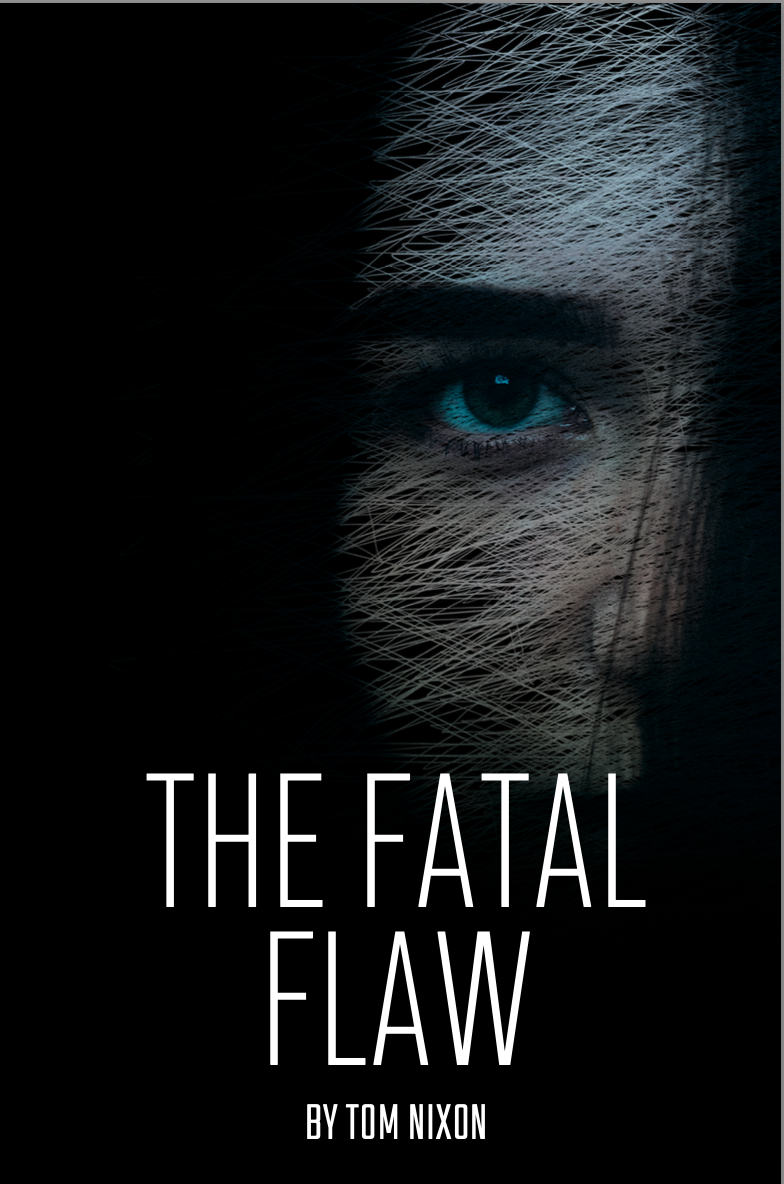
I am proud to share the news that my second fiction novel, The Fatal Flaw, has been released and is now available on Amazon.com.
This is my second self-published work of fiction, following the release of The Long Lost in 2017.
Like the one that preceded it, this book is in the suspense genre. Take a look, if you’re into that sorta thing (you know, supporting amateur authors, reading novels, and trying to figure out what the fatal flaw may be). Thanks to all who have supported me and my writing habits over the years!
Brian Clark calls it the “teamlance” model.
As with just about everything in life, the old model is being democratized and decentralized in the world of marketing and advertising. While the big-agency model is still the right fit for many, others are discovering a new way of client service that offers the best of all possible worlds: experience, bandwidth, resources, flexibility and affordability.
Today we are announcing that we have entered into an informal (and even undocumented) partnership of the teamlance model with a long-time collaborator, Curtis Hays and his team at Collideascope. Meet the rest of the team here.
Collideascope is a vast network of best-in-class resources that collaborate to augment in-house and agency marketing teams, as well as direct service to clients themselves. Working in concert with your internal resources, the Collideascope partnership of experienced specialists provides marketing teams with an A-Team of lead-gen support…as well as a deep bench.
Members of the Collideascope collective have been collaborating with each other for decades, building a keen understanding of each other’s strengths and assets. As affiliated but distinct entities, our team is able to scale up or down to meet any challenge, from supporting big brands with big ambitions to plugging in quickly to small, discrete projects as needed.
With virtually unlimited skill sets and resources at our disposal, the teamlance model has the ability to provide any possible area of discipline in the service of lead generation and brand building. The model delivers highly seasoned expertise and best-in-class capabilities — without the big-agency bloat, overhead and bureaucracy.
As a writer, I may not be the best coder in the world. But I know of someone who is. And he’s only a text message away. This allows me and my agency to focus on what we feel we truly do best while remaining “full-service” for those types of businesses that have multiple needs demanding specialized skill sets.
It’s the benefit of hiring a generalist that can do it all with the precision and deep expertise of a highly specialized tradesperson.
Don’t get me wrong. The agency model is not broken, necessarily. Boutiques and mid-sized agencies are still a great fit for a great many clients. As is the large mega-firm, for the large, mega brands. But for others, teamlancing offers a little of everything for those looking for a little of everything.
And there’s another reason to think of this in terms of Hollywood. Independent contractors are the norm in film and television production, even though teams often work together on project after project. Brands can turn to teamlancing to maximize the flexibility of their operations with self-managing creative resources that are specialized, right-sized, and timed to their changing needs, whether project-based or for the long term.
– Brian Clark
“Show me, don’t tell me.”
Those were the words a younger, deflated Tom Nixon read written in red atop his recently submitted creative writing assignment.
The admonishment, coming from my sixth-grade teacher, would be a recurring theme in my life.
“Show me, don’t tell me.”
I saw the words again in high school, upon return of my argumentative writing assignment. Again in college, scribbled in blue across the top of the cover page to my recently submitted screenplay.
“Show me, don’t tell me.”
Don’t TELL me the character was angry. SHOW me.
Don’t TELL me why I should be persuaded by your argument. SHOW me.
Don’t TELL me that everyone was sad about the tragic event. SHOW me.
Don’t TELL me the the story had a happy ending. SHOW me.
How did the character react? What actions did she take that demonstrate the emotion you’re describing? What does the character say or do to convince the reader and make him or her truly authentically relate to the emotion you’re trying to describe?
“Show me, don’t tell me.”
Don’t use marketing language to tell me your product is “best-in-class.” Show me.
Don’t tell me how customer satisfaction is your highest priority. Show me.
Don’t tell me how your product changes lives, solves problems, or achieves professional or personal aspirations.
Show me.
What I learned in sixth grade holds true today. If you’re using your marketing content and messaging to TELL people why they should engage with you, nobody will relate. But if you SHOW them—through storytelling, testimonial, metaphorical allusions, emotional connection—your story will resonate. And be remembered.
Remember, people might forget what you say, but they will remember how you make them feel.

What if you could do fewer things, that look less time, and actually have more success building your business and selling your services?
That’s the premise behind my new book, Do Less. Sell More.: How Entrepreneurs are Building Seven-Figure Businesses without Breaking the Bank, Working Like Dogs, or Losing their $#@%!
For practitioners at large professional services firms—such as law firms, accounting firms, consulting firms, and others—the constraints on time are equally real. For service professionals, the conundrum is circular: We need to develop new business to earn a living, drive revenue into the firm, and create value. We also need to bill our time and serve the clients we have—which also drives revenue, creates value and supports our living. Since we are still limited by the finite resource of hours in the week, we struggle to “find time” to do business development activity effectively and to the extent required to generate results.
In Do Less. Sell More., I lay out a mindset and methodology to give you permission to do fewer things—maybe just one!—as well as a roadmap/worksheet for you to discover and define what those things should be for your marketing and sales plan.
This book is a must read for anyone looking to simplify their marketing and business development, by cutting through the noise and getting to the heart of what matters. As an entrepreneur, I found many useful tips and takeaways and will be referencing this book as I work to build my business. -Shari Belitz
Want to learn more? Check out tomnixonbooks.com
It might be hard to believe looking at me now, but a full-time music career and pursuit of rock-and-roll stardom preceded my foray into marketing and public relations. That’s me in the center down there…looking too cool for school.
But what I learned as a starving artist back in the early 90s taught me the basics of nearly everything I do today as a marcom professional. In order for us to survive, it was all about promotion…and I mean, literally, “survive.” Here, then, are the 11 lessons I look back on and draw upon even today (musicians always “go to 11”):
1.) Video killed the radio star. The birth of MTV in the early 80s totally reshaped the music industry. Video gave adoring fans instant access to the personalities behind the music, and labels had to rethink the way they packaged their artists. It was not enough to sound good anymore, you had to visually appeal to your fans, and give them a side of you the music couldn’t otherwise convey. Brands and B2B marketers need to do the same. Video conveys personality, passion and persona far better than the written word, yet many businesses are slow to leverage the power of what can be extremely affordable video communications.
2.) Nothing travels faster than word of mouth. Good or bad, word of mouth will travel faster than your ability to control the message. If your band had a lousy live performance, people would scorch you. If you rocked live, your following would quickly grow. The same goes for social media today. People are talking about brands all day on social media. Are you listening? Are you engaging with the conversants? Are you keeping up with word of mouth?
3.) Publicity is platinum. Record reviews, live show write-ups and artist profiles were invaluable to the indie artist (in an era before the emergence of social media). Get your band in the press, and you would gain instant credibility and raised recognition. No one needed to know that you as the artist peddled your CD around with free pizzas to get access to the reporter…and no one needs to know a PR firm is behind the scenes generating your company’s publicity today.
4.) Constant contact. Third-party and indirect communications are clever and vital, and all…but never discard the power of direct communications. Back then, it was the periodic mailing with upcoming tour dates, sent via postcard to our database. Today, this can take many forms, from e-blasts and newsletters to compelling print communications artfully designed and packaged…all of which will serve to keep your company top-of-mind among current and prospective customers.
5.) You’re nothing without a database. Pursuant to the above, you simply MUST maintain a current database of vital contacts, including customers, prospects, referral sources, vendors, associates and friends of the firm. It sounds simple and self-evident, but you’d be shocked how many companies we talk to who have absolutely no database established. This is like planning a concert and not telling anyone about it. Or sending out a show announcement without mailing labels. (I would know…my keyboardist tried it once.)
6.) Advertising works. That is, if you have a measurable call to action. (Image advertising also works, but is a lot more difficult to measure.) The grunt work of being in a band performing at college towns in the early 90s included the exhaustive process of “flyering the gig.” This meant illegally adorning every tree, streetlight, kiosk and powerline pole on campus with flyers promoting the gig at the local bar. How did we know they work? On the flyers, we asked people to mention the “free shots” at the bar upon arrival. The bar owner didn’t care much for the tactic, but we knew the flyers were working.
7.) Your fans will do your bidding for you. If truly engaged, your fans become your greatest asset. They aren’t afraid to tell their friends how awesome your band is, but you might be. Brands, by the same token, need to empower their “fans.” Give them a place to gather (social media communities like Facebook and LinkedIn), let them engage with you so that they feel like part of a movement (Twitter and other social media), give them tools to spread the word on your behalf (sharable content on your website and public content communities such as SlideShare, YouTube and Flickr). Most small companies today ignore social media as a marketing strategy. Big mistake.
8.) If you can’t get signed, put out your own CD. The barrier to entry for a local band was the ever-elusive record contract. Without it, no one could get to the music, at least not on a large scale. So many local bands simply recorded their own CDs, distributed them independently, and grew their followings organically. Today, companies perceive a barrier to mass communications being the difficulty in engaging a mass media outlet to spread the word about an event or other news story. But content communities like YouTube, Flickr…and the sheer breadth of the Internet’s reach allow any brand to be a mass communicator. They have the option of simply creating the content themselves and using the available online channels to spread the word. Like the local indie artists, nothing is stopping them but their own imaginations, budgets and level of commitment.
9.) Not all bands should toot horns. All of the marketing in the world won’t work if you’re not honest about what you’re selling. Marketing is often spin, but it can’t be spun out of control. Social media is keeping brands more and more honest these days. Keep that in mind when you’re communicating your product’s or service’s strengths to your key audiences. It’s like the band that uses studio tricks and effects to make their album sound masterfully polished…but then can’t pull it off live. You WILL get found out.
10.) Grow your hair out and wear second-hand clothes. Brands need to be known for something—big brands and small businesses alike. In music-artist terms, you need to have an “image.” Do some in-depth soul searching to discover what yours is—and what you want it to be—then carefully craft that message for all to behold. Preach that message internally, and live it always externally. Be consistent, and be recognizable.
11.) Have fun. Life’s too short to sweat the small stuff. In other words, “Rock on!”
(For those who are interested, and for those who don’t believe me, see more about Jes Gru, the band that was, here, here, here and here.)