
Author: Tom Nixon

  • That One Time I Bought a Furnace Filter

    That One Time I Bought a Furnace Filter

    I just bought a new filter for my furnace. Don’t get too excited. This means next to nothing to your company’s marketing strategy.

    It was transactional. It was need-based. And it was immediate.

    I identified the need. Within minutes, I was searching online for the replacement. I found it. Put it in my shopping cart. And checked out. Done.

    I can’t even remember the name of the supplier, and it’s only been two days.

    There was nothing emotional about it. (No wonder you’re not excited about my big news.)

    But that’s not how prospects are shopping your professional service, in all likelihood.

    Pivot to You and Your Furnace Filter

    Some 98% of the addressable market is NOT looking to hire you right now. There will be no search. There will be no shopping cart. There will be no instant transaction. And you can’t market to folks that way. Even though YOU want it to work that way. THEY don’t want to buy that way. And won’t.

    There is no link you can send these folks. No “lead magnet” will put this 98% of the prospect population into market. You can’t force them to need you. But 100% of that 98% MAY need you at SOME POINT. And that’s the point.

    When that need genuinely surfaces, there WILL be emotion tied to it. Likely pain. Sometimes aspiration. That’s when the will to buy becomes heightened, both in intensity and in immediacy.

    What are you doing now to become the provider of preference tomorrow?

    Are you educating the market? Are you earning their trust? Are you demonstrating your value?

    Because that’s how the business is earned. It’s also when.

    Yes, you may get hired EVENTUALLY, but you must start earning the trust that leads to the sale NOW. Not immediately, mind you. Over time.

    That’s the natural sales cycle of the buying population for most business-to-business professional services. And you won’t change it by chasing clicks and screaming calls to action.

    Would that it be as easy as selling a furnace filter to a Midwesterner in the dead of winter. But, alas…you’re going to have to work for it.

    _

  • The Complete Guide to 2025 Marketing Strategy Planning

    The Complete Guide to 2025 Marketing Strategy Planning

    Looking to Craft a Killer Marketing Strategy for 2025?

    Curtis and I kicked off Season 2 of the Bullhorns and Bullseyes podcast by going live (originally airing December 18, 2024), during which we covered a range of topics with both curiosity and analysis alike.

    Appropriately, we opened the show talking about the importance of authenticity when it comes to branding and marketing. (You know…like, going live and in-person in real time?)

    We did our best to cover the relevant bases, fielded some live questions, and tried to tee listeners up to hit a home run when developing their 2025 marketing plans!

    Topics Covered:

      • The Shift to Authenticity: Why Gen Z rejects traditional advertising

      • The Power of Video Marketing: Tips for creating authentic video content

      • LinkedIn Newsletters: Building engagement from new audiences

      • Chatbots: Personalized or AI-powered?

      • Smarter Attribution: Navigating privacy and complex customer journeys

    Watch, Listen + Subscribe:

    Watch the video below. Or find the episode on the podcasting platform of your choice. While you’re at it, don’t forget to subscribe to both the podcast and our YouTube channel so you never miss an episode!

    Happy 2025 planning, marketers!

    👉

  • Don’t Be a Hero

    Don’t Be a Hero

    Who Is the Hero In Your Story?

    If I told you my life story, would you care?

    What if I asked you to tell me your life story?

    Eugene M. Schwartz’s The Brilliance Breakthrough: How to Talk and Write So That People Will Never Forget You should be (and often is) considered to be the “bible” of effective copywriting and storytelling. One of the many tenets Schwartz embraces is the notion of making the reader (or the customer) the hero of the story you’re trying to tell.

    Too often, we put the capes on our own backs. And that’s where the writing falls short.

    Real World Example

    Let’s say you’re writing an email to promote a time-management webinar. Here’s how the message might look if the writer is positioned as the hero of the story, versus the reader.

    Writer-Focused Approach

    “Our team has spent months crafting this webinar to showcase our expertise in time management. We’ve developed a proprietary method that combines advanced scheduling techniques and task prioritization strategies, which we believe are groundbreaking. Join us to learn more about what we’ve created.”

    Why It Falls Short:
    This approach is all about the writer—their effort, their methods, and their belief in their expertise. It doesn’t directly address what the reader will gain or how it will solve their problems.

    Reader-Focused Approach

    “Are you constantly battling an overflowing to-do list? Imagine reclaiming hours in your day while accomplishing more with less stress. In our free webinar, you’ll discover simple techniques to prioritize your tasks, streamline your schedule, and take back control of your time. You deserve a system that works for you—join us to make it happen.”

    Why It Works:
    This version immediately taps into the reader’s pain points (stress, lack of time) and offers a tangible benefit (reclaiming hours and reducing stress). It emphasizes the reader’s needs and outcomes, making it far more compelling and relatable.

    Takeaway:
    To shift the focus from the writer to the reader, always frame your content in terms of the reader’s problems, desires and benefits. I call this “pains and gains.” The reader is hard-wired to imagine himself or herself as the hero of their own story…even if you’re going to swoop in and ultimately save the day.

    End of Story.

    Eugene Schwartz’s The Brilliance Breakthrough isn’t just a guide to writing; it’s a roadmap to human connection through language. By applying its lessons, you can craft messages that not only resonate with your audience but also leave an indelible mark.

    Whether you’re writing to inform, persuade, or inspire, remember Schwartz’s core principle: writing is about making your ideas unforgettable. Through clarity, empathy and storytelling, you can unlock the full potential of your words—and, in turn, your audience’s imagination.

    Now go on. TELL US THAT EMOTIONAL LIFE STORY. BUT Remember…

    don’t be a hero.

  • Giving Thanks

    Giving Thanks

    Happy Thanksgiving!

  • A Messaging Parable

    A Messaging Parable

    Stop me if you’ve heard this one before:

    A product innovator walks into an advertising agency…

    He’s invented the best hammer to ever hit the market. Now he needs the agency’s help to tell the world all about it.

    “What makes this hammer so special?” the creative director asks.

    “Just look at it,” the proprietor beams with pride. “It’s a work of art.”

    “Why would anyone buy it?” the agency lead asks.

    “Because!” the proud tool wielder interjects, “it is made of state-of-the-art titanium. Its ergonomic, padded grip is like nothing the market has ever seen before. And the reinforced hammer face is so durable, we guarantee it for life!”

    “Interesting,” the creative director observes. “Can we talk to someone who’s bought one?”

    “Sure! Here is our happiest customer,” he quickly obliges, handing the CD the customer’s contact information. “He’ll tell you all about it. The strength, the light-weight design, the innovative handle, the power and speed. If we can get all of that into the advertising and website, this thing is sure to fly off the shelf!”

    The creative director schedules a phone call with the satisfied customer. They chat. He begins…

    “Tell me, sir, why did you buy this hammer?”

    A grin forms on the customer’s face. That’s when the creative director knows he’s going to get to the heart of the customer journey. The trigger. The inflection point. The one to capture in the messaging and marketing. And, sure enough, he gets it…

    “Because,” the customer explains, “I wanted to build a treehouse to spend more quality time with my kids.”

    💡💡💡💡💡💡💡

    So. What do you think the creative should lead with?

    Why. Not what. Not even how.

    1 —> Lead and captivate with Why.
    2 —> Support and differentiate with How.
    3 —> Validate and close with What.

    Nobody wants your what until they’re comfortable you understand their why.

    Once that emotional first connection is made on the WHY level, you can move on to selling your bigger, better, badder HOW…but not before.

    Your WHAT is essentially the same as every other hammer in the toolbox.

    The customer decides WHO. And WHY.

  • Don’t Fake It. Make It.

    People aren’t interested in your words. They want your ideas.

    Anyone can produce words. Even artificial intelligence can kick out fairly convincing-sounding words. But those aren’t ideas. At least not yours.

    Ideas are the synthesis of available information, filtered through the prism of your unique perspectives and lived experiences, and delivered with proscriptive advice and personalized guidance. And the best ideas belong to the thought leaders among us. Are your best ideas worthy of broader recognition?

    I understand the temptation to outsource the rigors of content development to AI; but just know that what you’re packaging is a culmination and compilation of other people’s published thoughts, data and information. Sure, robots can retrieve and package words for you; but they can deliver the same goods to pretty much anybody. And will.

    Think about it: If your target audience can cut out the middle man and take on the task of retrieving words and data for themselves, where does that leave you as the expert counselor and trusted advisor?

    DATA DATA EVERYWHERE, AND NOT A DROP OF IT THAT THINKS.

    Data is everywhere. Information is boundless. Wisdom remains scarce.

    Your ideas and your analysis are unique to you. Prove it. Generously and consistently offer up to the world how you think, where you fit, and how you solve problems to deliver value. Your ideas. Your expertise. Your unique perspectives.

    Be different, because more of the same is certainly out there. And is it ever. More than ever.

    People Go Looking for Answers, Not Options

    A correlative example: I can go to WebMD and compare my symptoms to a plethora of possible ailments and maladies. They all sound convincing to the untrained ear. I can come away reasonably informed that an unknowable number of inflictions can be the root cause of my pain. And I can get that for free…and almost instantly.

    But it’s not the answer I’m seeking. It’s just more inputs.

    So I don’t turn to a website to treat me. For that, I rely on someone I trust. A human. Someone who can cut through the clutter and tell me — personally and directly — what’s going on and what I should do about it.

    That trust is earned. But once earned, it’s difficult to erode.

    Good news: It’s you they’re after. Not your words.

    Show up. Be visible. Be human. Be different. The rewards are most definitely worth the effort.

  • Announcement: New Book Release

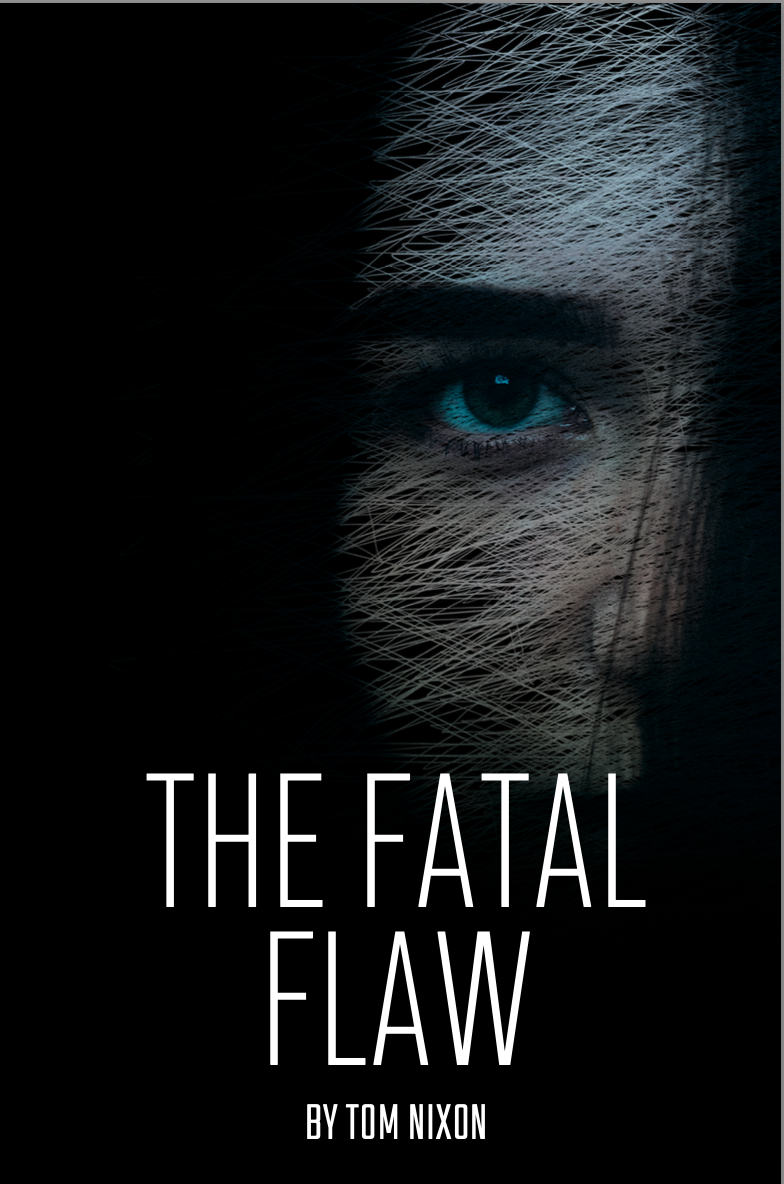
    The Fatal Flaw Now Available on Amazon

    I am proud to share the news that my second fiction novel, The Fatal Flaw, has been released and is now available on Amazon.com.

    This is my second self-published work of fiction, following the release of The Long Lost in 2017.

    Like the one that preceded it, this book is in the suspense genre. Take a look, if you’re into that sorta thing (you know, supporting amateur authors, reading novels, and trying to figure out what the fatal flaw may be). Thanks to all who have supported me and my writing habits over the years!

    To learn more about my previous forays into writing — both fiction and nonfiction— visit TomNixonBooks.com.

  • Big Tech Wants Authenticity, Not Artificiality

    Big Tech Wants Authenticity, Not Artificiality

    LinkedIn Follows Google’s Lead. You Should Do the Same.

    I recently shared the following post and Entrepreneur article, relaying how LinkedIn’s algorithm update will be a game-changer for content creators and publishers on the platform. What made this post generate 100 times my typical impression account? In a word, it was “helpful.”

    People Are People

    The upshot? Big Tech knows where its bread is buttered. The observation that “If the service you’re using is free, you are the product” is apt here. LinkedIn, Google and others understand that the product they are selling to brands and advertisers is humans — their attention, their eyeballs, and their interest. Both are working dutifully to forestall the day in which their platforms are just a bunch of robots shooting AI-generated content back and forth to one another. If the people leave, the business model evaporates.

    The takeaway:

    If Big Tech is working to sniff out and suppress AI-generated content, you should do the same. Algorithms are being designed and deployed to spot algorithms, and if you are relying on them to be your voice and represent your expertise, you’re risking visibility, exposure and engagement. Without those, you might as well not even be in the content game to begin with.

  • Announcing My Teamlance

    The Un-Agency Model of Delivering Marketing and Advertising Services

    Brian Clark calls it the “teamlance” model.

    As with just about everything in life, the old model is being democratized and decentralized in the world of marketing and advertising. While the big-agency model is still the right fit for many, others are discovering a new way of client service that offers the best of all possible worlds: experience, bandwidth, resources, flexibility and affordability.

    Today we are announcing that we have entered into an informal (and even undocumented) partnership of the teamlance model with a long-time collaborator, Curtis Hays and his team at Collideascope. Meet the rest of the team here.

    Look Through the Collideascope

    Collideascope is a vast network of best-in-class resources that collaborate to augment in-house and agency marketing teams, as well as direct service to clients themselves. Working in concert with your internal resources, the Collideascope partnership of experienced specialists provides marketing teams with an A-Team of lead-gen support…as well as a deep bench.

    Members of the Collideascope collective have been collaborating with each other for decades, building a keen understanding of each other’s strengths and assets. As affiliated but distinct entities, our team is able to scale up or down to meet any challenge, from supporting big brands with big ambitions to plugging in quickly to small, discrete projects as needed.

    With virtually unlimited skill sets and resources at our disposal, the teamlance model has the ability to provide any possible area of discipline in the service of lead generation and brand building. The model delivers highly seasoned expertise and best-in-class capabilities — without the big-agency bloat, overhead and bureaucracy.

    As a writer, I may not be the best coder in the world. But I know of someone who is. And he’s only a text message away. This allows me and my agency to focus on what we feel we truly do best while remaining “full-service” for those types of businesses that have multiple needs demanding specialized skill sets.

    It’s the benefit of hiring a generalist that can do it all with the precision and deep expertise of a highly specialized tradesperson.

    Don’t get me wrong. The agency model is not broken, necessarily. Boutiques and mid-sized agencies are still a great fit for a great many clients. As is the large mega-firm, for the large, mega brands. But for others, teamlancing offers a little of everything for those looking for a little of everything.

    And there’s another reason to think of this in terms of Hollywood. Independent contractors are the norm in film and television production, even though teams often work together on project after project. Brands can turn to teamlancing to maximize the flexibility of their operations with self-managing creative resources that are specialized, right-sized, and timed to their changing needs, whether project-based or for the long term.

    – Brian Clark

  • Building on Rented Land

    Building on Rented Land

    A Content Strategy that Defies Conventional Wisdom

    “You need to build your content strategy on rented land. In fact, you have no choice.”

    This somewhat unconventional wisdom sparked some interesting thought and conversation between Jay Harrington and me on a recent episode of The Thought Leadership Project podcast.

    At issue: Should you be putting your content on your website and placing it behind “gates,” or sharing it freely on social media and elsewhere? Read the post by Mark Schaefer that started it all here.

    Whereas we used to advocate for a hub-and-wheel approach, designed to lure traffic back to our home base (website or blog), the new model is all about “setting your content free,” or as Mark puts it:

    “In essence, every social media policy, practice, and procedure enacted over the past 10 years has made it nearly impossible to drive people to your “owned” media presence. So why are we still obsessed with this idea?”

    For one, the algorithms that drive search engine results, social media feeds, and content delivery more generally are working against you, when you employ the traditional methodology of publishing first to your owned content channels then posting links to that content on social media.

    Secondly, not only do social media and Google not want to direct traffic to properties they don’t own and control (i.e., your website and blog), the people you want to reach don’t really want to go there. At least not by instinct. They are in scroll mode. Browsing. Digesting nibbles, and being cautiously judicious about the content meals they sit down to.

    Instead, you have to serve up your content where people are spending their time, and where search engines and social networks have no bias against your content. This means posting directly on LinkedIn, or Facebook, or Twitter, etc. It means no links. It means no hub-and-spoke.

    Read Mark’s brilliant article for an in-depth exploration on this methodology, or listen to the podcast episode linked above to hear debate about the approach, as well as specific illustrations of how this can be done successfully.