Author: creativemillco

  • Short and Sweet? Not So Fast.

    Short and Sweet? Not So Fast.

    How Long Is Too Long Nowadays?

    I get this question a lot: “Should my thought-leadership articles be long or short?”

    My answer? “Yes.”

    That’s not a hedge. It’s my honest advice.

    Yes…true, people’s attention spans are shrinking. Brevity is the soul of wit. But authority is the soul of expertise.

    If you have little to say on a given topic, what message does that implicitly send to the intended audience? More than that…what message does it send to the algorithms on Google and social media platforms? Not the one you want.

    These platforms have released the details of changes to their algorithms that favor “helpful” content from “authoritative experts.” They are suppressing content that sniffs of AI…you know, the short punchy blog posts that you think people want to read?

    Short = Sweet?

    So yes…experiment with shorter posts. They could very well be the bite-sized bits of wisdom your network is hungry for. But don’t be exclusive to them.

    Both the people you need to pay attention and the algorithms that are indexing your content — and both are constantly judging the value and authority of your expressed expertise — value depth and differentiation.

    And if you thought this post was too long to read, then I have a shorter one I can send you!

  • Podcast: That’s a Wrap!

    Podcast: That’s a Wrap!

    40 Episodes of Bullhorns and Bullseyes

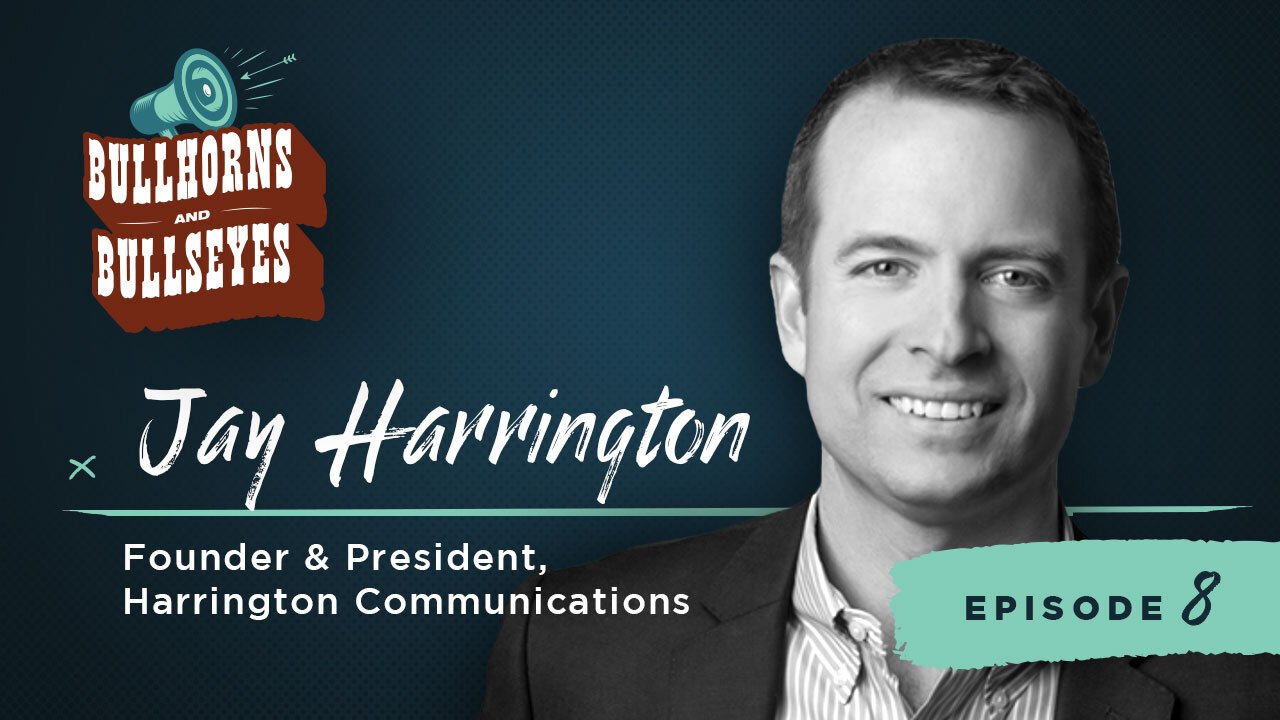
    My co-host, Curtis Hayes, and I put the wraps on the first season of our Bullhorns and Bullseyes podcast recently, recapping the big takeaways and lessons learned from our guests during the first 40 episodes…

    Watch:

    In a Nutshell

    The first season followed a general story arch that looked something like this:

    1.) Why—>How—>What

    The importance of messaging hierarchy.

    2.) Mutual Accountability

    The role of systems in marketing and how to bring both departments together.

    3.) What Gets Measured Gets Done

    The necessity of aligning metrics with objectives. (Hint: Not everything should be measured as pass/fail.)

    Specific Takeaways:

    • Reflecting on the journey of the podcast and its evolution.

    • How does “WHY-HOW-WHAT” align with the “AIDA” sales funnel?

    • The importance of KPIs in measuring marketing success.

    • Sales readiness is crucial for converting leads into customers.

    • How to align metrics with messaging and methodologies to maximize marketing efforts.

    • Brand building is essential for long-term business growth and short-term lead generation.

    • Sales training can significantly improve conversion rates.

    • Aligning marketing and sales efforts is key to success.

    • Budget allocation should reflect the sales funnel stages and map to the desired outcome of each stage…not JUST sales or conversions!

    Stay Tuned

    Be sure to subscribe on the platform of your choosing, so you can pick up with us right where we left off. Season Two is already in the works!

  • Let Content Be Your Praise Singer

    You Don’t Have to Be in the Room to Gain Influence

    Adrian Lurssen tells the story of when he went to see Nelson Mandela deliver an address in his home country of South Africa. He still draws upon the experience today, but in the most unusual context.

    Co-founder of JD Supra, a digital media company that enables professionals to greatly increase their visibility by sharing their expertise online, Adrian recalls seeing firsthand as a child something he was not at all familiar with. Prior to Mandela’s oratory, there emerged on stage a man dressed in tribal attire, singing a song in a native dialect. Adrian leaned over to his father, who had brought Adrian to the event, and asked him what this man was doing or saying.

    His father explained to Adrian, “That is Nelson Mandela’s praise singer. He has come out in advance of Mr. Mandela to tell the crowd how special Nelson is…to explain on Mr. Mandela’s behalf how wonderful his ideas and thoughts are, as soon to be expressed by the man himself. He’s literally singing his praises.”

    [Now you know where that expression comes from, if you didn’t already.]

    As Adrian recounts this tale to Jay Harrington and me on an episode of The Thought Leadership Project podcast, he likens this notion of a praise singer to how we considers thought leadership content to work on behalf of the expert that shares it.

    What Does This Have to Do with Content?

    In Adrian’s estimation — one I happen to share — thought leadership content serves in the capacity of being one’s praise singer. It exists out in the world to tell everyone how smart you are, what you know, what you think, what you can do, how you solve problems. “It sings your praises,” Adrian notes, “even when you’re not there in the room to do it yourself.”

    This is the problem (and the potential) for expertise that remains locked in one’s own mind, protected from the world it can serve, and held close to the chest. Ideas and solutions are what the market is looking for, whether you’re in the room to peddle them or not.

    You can’t be everywhere at once, but your thought leadership content literally can. If you trust the process, even when you can’t open a dashboard to witness firsthand vanity metrics and analytics, you’ll keep at it with the necessary discipline and optimism. Then, almost by magic, people start noticing. They start mentioning. They tell you they’ve been following along. That they hold you in high esteem. And, curiously, they or someone they know wants to hire you. Amazing how that works. 

    Unleash your praise singer. Generously share your ideas with the world. Let people know how wise and capable you are, just as a praise singer would do for you, were you the likes of Nelson Mandela himself.

    It’s okay to sing your own praises, if that’s how you want to consider it. But when you’re sharing expertise and solving problems for others, that doesn’t come across as self-service. It gets received as thought leadership.

    By the time you arrive “in the room” to make a pitch, close a sale, or entice a prospect, your praise singer will have done most of the work for you. And it’s entirely likely that the only person yet to come on stage will be you — not your competitors, the invisible and anonymous orators working without the benefit of a praise singer.

  • From the Archive: July 2009

    From the Archive: July 2009

    11 Things a Failed Music Career Taught Me About Marketing

    I often think about a blog post I wrote in July of 2009, realizing just how accurate it turned out to be with each passing year.

    One might say that chasing a dream of being an international rock star for four years following college was a lesson learned on how not to start a career. But I still point to those days as the foundation for everything I would come to learn about building a brand, attracting an audience, and selling a product.

    So, here reprinted in its original form, is that original blog post, first published July 27th, 2009 (please forgive all that is now out-of-date by today’s standards):

    Lessons Learned Are Often Timeless. Like These…

    It might be hard to believe looking at me now, but a full-time music career and pursuit of rock-and-roll stardom preceded my foray into marketing and public relations. That’s me up there on the left…looking too cool for school. Oh, my. The hair. All that glorious hair!

    But what I learned as a starving artist back in the early 90s taught me the basics of nearly everything I do today as a marcom professional. In order for us to survive, it was all about promotion…and I mean, literally, “survive.” Here, then, are the 11 lessons I look back on and draw upon even today (musicians always “go to 11”):

    1.) Video killed the radio star. The birth of MTV in the early 80s totally reshaped the music industry. Video gave adoring fans instant access to the personalities behind the music, and labels had to rethink the way they packaged their artists. It was not enough to sound good anymore, you had to visually appeal to your fans, and give them a side of you the music couldn’t otherwise convey. Brands and B2B marketers need to do the same. Video conveys personality, passion and persona far better than the written word, yet many businesses are slow to leverage the power of what can be extremely affordable video communications.

    2.) Nothing travels faster than word of mouth. Good or bad, word of mouth will travel faster than your ability to control the message. If your band had a lousy live performance, people would scorch you. If you rocked live, your following would quickly grow. The same goes for social media today. People are talking about brands all day on social media. Are you listening? Are you engaging with the conversants? Are you keeping up with word of mouth?

    3.) Publicity is platinum. Record reviews, live show write-ups and artist profiles were invaluable to the indie artist (in an era before the emergence of social media). Get your band in the press, and you would gain instant credibility and raised recognition. No one needed to know that you as the artist peddled your CD around with free pizzas to get access to the reporter…and no one needs to know a PR firm is behind the scenes generating your company’s publicity today.

    4.) Constant contact. Third-party and indirect communications are clever and vital, and all…but never discard the power of direct communications. Back then, it was the periodic mailing with upcoming tour dates, sent via postcard to our database. Today, this can take many forms, from e-blasts and newsletters to compelling print communications artfully designed and packaged…all of which will serve to keep your company top-of-mind among current and prospective customers.

    5.) You’re nothing without a database. Pursuant to the above, you simply MUST maintain a current database of vital contacts, including customers, prospects, referral sources, vendors, associates and friends of the firm. It sounds simple and self-evident, but you’d be shocked how many companies we talk to who have absolutely no database established. This is like planning a concert and not telling anyone about it. Or sending out a show announcement without mailing labels. (I would know…my keyboardist tried it once.)

    6.) Advertising works. That is, if you have a measurable call to action. (Image advertising also works, but is a lot more difficult to measure.) The grunt work of being in a band performing at college towns in the early 90s included the exhaustive process of “flyering the gig.” This meant illegally adorning every tree, streetlight, kiosk and powerline pole on campus with flyers promoting the gig at the local bar. How did we know they work? On the flyers, we asked people to mention the “free shots” at the bar upon arrival. The bar owner didn’t care much for the tactic, but we knew the flyers were working.

    7.) Your fans will do your bidding for you. If truly engaged, your fans become your greatest asset. They aren’t afraid to tell their friends how awesome your band is, but you might be. Brands, by the same token, need to empower their “fans.” Give them a place to gather (social media communities like Facebook and LinkedIn), let them engage with you so that they feel like part of a movement (Twitter and other social media), give them tools to spread the word on your behalf (sharable content on your Web site and public content communities such as SlideShare, YouTube and Flickr). Most small companies today ignore social media as a marketing strategy. Big mistake.

    8.) If you can’t get signed, put out your own CD. The barrier to entry for a local band was the ever-elusive record contract. Without it, no one could get to the music, at least not on a large scale. So many local bands simply recorded their own CDs, distributed them independently, and grew their followings organically. Today, companies perceive a barrier to mass communications being the difficulty in engaging a mass media outlet to spread the word about an event or other news story. But content communities like YouTube, Flickr…and the sheer breadth of the Internet’s reach allow any brand to be a mass communicator. They have the option of simply creating the content themselves and using the available online channels to spread the word. Like the local indie artists, nothing is stopping them but their own imaginations, budgets and level of commitment.

    9.) Not all bands should toot horns. All of the marketing in the world won’t work if you’re not honest about what you’re selling. Marketing is often spin, but it can’t be spun out of control. Social media is keeping brands more and more honest these days. Keep that in mind when you’re communicating your product’s or service’s strengths to your key audiences. It’s like the band that uses studio tricks and effects to make their album sound masterfully polished…but then can’t pull it off live. You WILL get found out.

    10.) Grow your hair out and wear second-hand clothes. Brands need to be known for something—big brands and small businesses alike. In music-artist terms, you need to have an “image.” Do some in-depth soul searching to discover what yours is—and what you want it to be—then carefully craft that message for all to behold. Preach that message internally, and live it always externally. Be consistent, and be recognizable.

    11.) Have fun. Life’s too short to sweat the small stuff. In other words, “Rock on!”

    (For those who are interested, and for those who don’t believe me, see more about the band that was here.)

  • Sale at Scale

    Sale at Scale

    How Content Allows a Company to Make Sales Calls, as if by Artificial Intelligence

    A veteran salesperson knows that look. That tone of voice. That one question for clarification uttered by a prospect that indicates a buying signal.

    And that’s when the sale begins to become final.

    A good sales agent knows what to do when that signal reveals itself. Soon, the seller becomes the closer, and the prospect becomes a client or customer.

    The only disappointing thing about that promise of future success is that they are hard to come by. By that, I mean: those opportunities…those moments…those qualified, veteran sales professionals that can detect the aroma of opportunity and know how to respond to it.

    If only you could clone that qualified sales person. If only those opportunities would arise in greater numbers. If only artificial intelligence could scrape the internet for you, uncovering prospects and revealing sales opportunities.

    That’s where content comes in.

    Let Content Serve as Your Artificial Prospecting Team

    Just as people in all walks of life are experimenting with artificial intelligence to perform human labor at scale and with greater pace, thought leadership content — once developed, published and syndicated — can permeate and infiltrate the digital universe and find prospects who are looking for answers, perhaps shopping for service providers, and at very least, consuming expertise and insights to further their own personal and professional objectives.

    Your human sales team can’t be everywhere at once. That’s not realistic, and it’s not scalable.

    But what can live everywhere all at once is content. Mining and extracting expertise from your company’s leadership, then refining those raw materials into consumables (in the form of blog posts, emails, published articles, social media posts, podcasts, videos, etc.) allows your experts’ ideas to travel. It makes your corporate expertise discoverable by those on the lookout for it. It works on a 24/7 time schedule and can travel to all corners of the globe in the time it takes someone to click a link, perform a Google search, open an email, or download a podcast.

    Where your humans — especially those wily sales professionals — can contribute to this winning formula is to share with your content strategy team what those common clarifying questions are…what those trigger points are that generate that one recognizable look, or tone of voice.

    What are the questions your prospect ask?

    What are the answers your sales team provides that trigger clarifying questions?

    What are the most common inbound questions or challenges posed by existing and prospective clients?

    What was a topic you knew more about than anyone else in the competitive field that landed you the contract of a coveted customer or client?

    What do people go looking for, and how can your content provide a conduit to those answers, your products and services, and ultimately, your opportunity to win their business?

    Content isn’t exactly artificial intelligence. But it is exploitable intelligence that travels, that lives and breathes everywhere your human sales team can’t, and it is discoverable by your prospects, whenever and wherever they going looking for it.

    Content is scaleable intelligence.

    CONTENT IS sale-able intelligence.

    And it’s one thing your sales team can’t be:

    everything everywhere all at once.

  • The Content Creator’s Fallacy

    The Content Creator’s Fallacy

    Lost in Transmission

    You’re writing your content as if someone’s going to read it. And that’s the wrong approach.

    Huh? Here’s why…

    If you’ve ever written long-form content, you’ve likely labored over structure, an outline, and the dramatic conclusion with the big-idea takeaway you’re leaving the reader with at the end.

    Sure, you’re sitting down and carefully proofreading your work…word for word…from beginning to end. You’re proud of the finished product. You might even be satisfied with the case you’ve made and the “closing argument” in the conclusion.

    The problem is, nobody will read it that way.

    Readers Don’t Read Anymore

    Few readers these days will pore over your piece and parse each and every word the way you’ve written and proofread it.

    So the goal is not to write an article that someone will read in its entirety at first exposure to it.

    The goal is to get them to click a link. The next goal is to get the clicker to read beyond the headline. The goal after that is to give them enough in the opening paragraph to read through the next several sentences…and skim ahead to see if the rest is worth it.

    So if you’re burying the big-idea takeaway at the bottom of your piece, few may ever get there to see it.

    Don’t create content with the notion that you expect busy audiences to read, view or listen to it in its entirety. They will eventually, but only if you earn their attention — early and often.

    Instead, structure your content so that it begs a scan or skim, and promises more and more the longer someone spends time with it.

    Give the goods away early, and don’t save the best for last.

    Remember: the choice a reader is faced with first and foremost is this: Skim or skip?

    What happens after that is entirely in your control.

  • Journal Entry #16

    My Criminal Career

    I never thought I’d be a “journal” guy. But smart people I know and trust continued to testify to its merits, and one day I took them up on the advice to start journaling.

    Consider this the most recent installment, which I share publicly and nakedly as a way to announce my latest creative pursuit…

    The mirrors in your eyes will only shine on yesterday.

    In 1996 I gave up the pursuit of a career in the music industry. The decision to leave my band at the time — Jes Gru — just as it was beginning to get the notice of legitimate players in the record business, was a difficult and painful one. But the truth was, my “criminal career” (as Glen Phillips of Toad the Wet Sprocket so eloquently coined his own) was stealing from me. It was burgling my present and ransacking my future. So I walked away.

    What followed was a rather significant bout with depression and the first of multiple identity crises to come. I was working to come to terms with this turning point in life, taking stock of the damage my musical ambitions had inflicted on my life. Relationships were ruined, career opportunities were forsaken, and the act of leaving the band would destroy four of the best friendships I’d ever have in life.

    As a result, I came to hate music. So much so, that I went more than a full year avoiding any semblance of music like the plague. I turned off the radio permanently and ignored my CD collection entirely; and I certainly wouldn’t pick up my bass or acoustic guitar. Music was dead to me. And I was dead to it. Harrumph.

    Some two years later, in 1998, the winter of discontent began to thaw…

    When the curtain falls don’t tell yourself your swan will never sing.

    As the ice eventually melted — without me ever being fully aware — I began to slowly but surely let music back into my life again. The radio turned on. The CDs found their way back into the car. The dust was blown off dormant guitars and amplifiers. I even began to write songs again.

    Before long, the fire had been re-lit. I invested what were then meager earnings in a 16-track recording device and began to record my first original music since leaving Jes Gru. (In fact, one of the songs I would go on to write would be a completion of a Jes Gru song we never quite finished while still together as a band.)

    It was time to make music again, if only for myself. I decided to complete a full-length album…just to have…ya know…for me. And me alone. I never intended for it to see the light of day. And it basically never did.

    But it was catharsis. A rebirth. A familiar but forgotten creative outlet.

    And then it happened.

    Never try to fly with frozen wings.

    That project would come to be known as Mill House. For the most part, it was me writing and recording, relying on the talents and expertise of those I’d need to bring into the project to do the things that I could not, myself, do capably. Most notably, my brother John would be my main accomplice, providing the drums, keyboards, mixing and mastering for much of the material.

    It was on a day that I found myself at his music studio recording vocals for a Mill House track, “Nothing to Say,” that “Frozen Wings” was initially born.

    Following the vocal session, John asked me if I wanted to hear his latest composition — then a work in progress. He had most of the chord progressions in place, and asked if I wanted to write the lyrics (as I had been doing for a few songs on his initial album release for his Mr. Radio project). I eagerly obliged, as the fire was smoldering once again, and here presented to me was an opportunity to keep those creative juices flowing.

    With melody in hand, I went home and began to write the lyrics to what would become “Frozen Wings.” It was the song I needed to write, because it was the song I needed to hear.

    The theme? You can revel in the past, but you can’t dwell in it. Someone needed to tell me to move on. Move forward. Because when you do, you never know what adventures and rewards await. Even if the present feels like the ending chapter to your past. It’s not. It’s the middle. The rest of the story awaits.

    The words flowed out of me effortlessly. They were the culmination of a journey that began with unbridled enthusiasm and optimism (the Jes Gru era), that later brought enduring heartache and depression (the band’s break-up and demise), and which now had led me to a place of healing and moving on.

    The song, as a result, is all about looking forward, even while embracing what came before. Not out of mourning, but of celebration…

    Rebirth. Parole. And Frozen Wings Rising from the Ashes.

    Today, that criminal career has been paroled and reformed. I’ve managed to make a living out of the English degree I had earned prior to throwing it all away to chase the life of a rock star. I now have the freedom and bandwidth to apply my love for writing, having released two novels and one non-fiction title.

    And music is mercifully back in my life. In 2020, I launched August Red, a musical project with influences in — and paying homage to — yacht rock and west coast AOR of the late 70s and early 80s. I am once again conspiring with brother John; and I am writing, recording and releasing music again.

    It may not be a career, this music business of mine. But what was once criminal is now reformed, released and back out into the free world. I couldn’t be happier. Funny, where life takes you.

    Philosopher Søren Kierkegaard famously said, “Life can only be understood backwards, but it must be lived forwards.”

    Turns out the career wasn’t so criminal after all. There was some good in there.

    Oh, and the relationships I thought it had once destroyed? I’m now married to the girl I wronged back then; and we have two beautiful and talented children. Those friendships I thought I had destroyed? The boys in the band are all besties again, and have been for decades. We’re even making music together again, as some members of the Gru are now collaborating and composing as The Few. (More to come on that front soon!)

    I’m starting to understand things more clearly, the less time I have in front of me, and looking backward. Maybe there’s a lesson in there somewhere for you to take away and apply to your own life.

    Regardless. There. I did a journaling.

    And they were right. Feels pretty good.

    i swear, we had the time of our lives…

    For those interested, here is that song, originally composed in 1998 and released by Mr. Radio, and today reimagined in a yachty kinda way as August Red’s latest single:

  • Podcast: LinkedIn Mastery

    Podcast: LinkedIn Mastery

    Bullhorns + Bullseyes Meets The Thought Leadership Project

    It’s the crossover event of the season! Well, maybe.

    Jay Harrington from The Thought Leadership Project joined Curtis Hays on the Bullhorns and Bullseyes podcast recently. And I’m caught in the middle making sure nobody’s candy bar drops into anyone’s peanut butter!

    Topic: LinkedIn Mastery, both from a content creation standpoint and from an advertising perspective.

    Jay and Curtis each have unique and valuable insights to share, presenting what I think is the perfect world for LinkedIn mastery: organic reach and targeted advertising.

    📢 ➕ 🎯 🟰 🏆

    Useful Links:

    Listen now, or find it on the podcasting platform of your preference here:

    Details, video, transcript and more here.

    Sneak peek:

    Show notes:

    Jay Harrington is president of the HARRINGTON agency and is one of the country’s leading consultants and strategists in the areas of legal marketing, PR and business development. His particular passion and profound area of expertise is building a network and growing an audience on LinkedIn to generate more and better new business opportunities.

    In this podcast crossover event — Tom and Jay also separately co-host the Thought Leadership Project podcast — Curtis and they discuss tips for publishing thought leadership and content marketing on LinkedIn.
    Together, they explore the engagement metrics on the platform and the effectiveness of using LinkedIn as an advertising platform. They also highlight the importance of understanding your audience and narrowing your niche, as well as the need for sustained effort and consistency in creating thought leadership content on LinkedIn.

    Takeaways:

    • Thought leadership and content marketing are effective strategies for growing networks, building reputation, and earning trust on LinkedIn.

    • Engagement metrics on LinkedIn have seen fluctuations, but the platform remains a valuable space for reaching a B2B audience.

    • LinkedIn can be used as an advertising platform, with carousel ads and video content performing well.

    • Understanding your audience and creating content that addresses their challenges and interests is crucial for success on LinkedIn.

    • Targeting specific audiences on LinkedIn requires careful consideration of demographics and job titles.

    • LinkedIn’s revenue model is based on keeping users on the platform, making it important to create and share content native to LinkedIn.

  • Podcasting: Your 2024 New Year’s Resolution

    Podcasting: Your 2024 New Year’s Resolution

    DOES THE WORLD REALLY NEED ANOTHER PODCAST?

    The answer to that question may be no. But the more relevant answer is this: The world may not need yet another podcast…but you know who does? Your narrowly defined target audience.

    People likely laugh at my dogged enthusiasm for podcasting as a thought leadership platform. Want to know why I’m such an avid believer?

    Busy executives and decision makers—the people you need to reach and sell to—self report that audio is becoming their preferred format of media consumption for a variety of reasons:

    It’s passive: They can consume it on the go, during a commute or while working out.

    It’s immersive: Though they may be doing something else at the time, you have their full and undivided attention for 30 minutes at a time! What other format allows you to achieve that?

    It’s personal: The experience is multi-sensory and four-dimensional. Your audiences will come to feel like they know you personally, which is ultimately who they will award their trust and business to.

    It’s on their timeline: Podcasts are consumed on-demand, meaning podcasters maximize their exposure in this new world of anytime/anywhere media consumption.

    Remember, if you are producing a podcast to grow your business—and not be the next internet celebrity—you don’t need to appeal to everybody. You only need to serve a very distinct and defined core audience. Unless you’re the next Joe Rogan or Howard Stern, you’re not going to amass an audience of millions. But that’s not the point. 

    THE SMALLER YOU GO, THE BIGGER YOU’LL BE

    Consider my friends Bryan O’Keefe and Gena Usenheimer, who co-host “Into the Breach,” which bills itself as “the first law firm podcast exclusively devoted to reps and warranties insurance and the transactional risk markets.” Whoa. Talk about niche. What even is that, you might be asking. 

    Yes. Extremely niche.

    When Bryan approached us about his idea to start a podcast serving a very niche audience, he really meant niche. He told me, there are maybe 20 companies in the entire world that would be in a position to hire me and my firm for this type of work that I specialize in. My audience is a very specific person within those types of companies. I figured, the largest his audience might ever get would be one or two hundred people.

    Did that discourage Bryan and Gena? No. It emboldened them.

    Bryan told me, “Nobody out there is doing this type of podcast. Nobody’s serving this audience. We have the opportunity to be the first. And if we do it well, we may be able to stake out a position as the only podcast serving this market.”

    SMALL BALL YIELDS HOME RUNS

    So how’d that turn out for them?

    Bryan wrote me on LinkedIn, “Gena and I saw an incredible explosion of work in the last two months.  We were averaging about [X] deals per month previously. And we’ve had [10X] the last two months, including [6X] alone this month!  It was a very good ‘problem’ to have. We can’t say enough the role that we think the podcast is playing in the growth.” 

    You can do the same for you and your podcast. But resist the urge to appeal to a mass audience, and instead target only a small niche, with niche content and specialized expertise.

    So here’s step one: Complete this sentence:

    My podcast is going to provide valuable  __________________ for ___________________.

    The first blank is your content focus. The second is your audience. 

    Now you’re off and running…and your first professionally produced podcast is closer than you think.

  • Happy Holidays

    From the Content Elves at The Creative Mill to You and Yours…

  • On Bullhorns and Bullseyes

    On Bullhorns and Bullseyes

    Announcing: A New Podcast to Help You Reach More People More Effectively

    Effective marketing programs should employ both bullhorns and bullseyes. 📢 + 🎯 = 🏆.

    Bullhorn tactics are broadcasting vehicles — tools designed to get your message and your brand in front of large audiences. Even niche audiences…but at scale.

    Bullseye tools target specific people (both personas and individuals) with precision and purpose. Even down to a discrete person or IP address.

    Bullhorns are mass communication initiatives: PR, advertising, programmatic and digital, content marketing, newsletters, etc. Thought leadership and brand positioning.

    Bullseyes are sophisticated and exacting: retargeting, tracking pixels, automation sequences that are triggered by an individual user taking a specific action. Tracking, timing and targeting.

    BOTH are required in the modern media environment, where individuals are taking very dispersed and unpredictable paths to purchases…but who also congregate in micro-communities in mass.

    Not one or the other. Both. Bullhorns + Bullseyes.

    📢 + 🎯 = 🏆

    Now Streaming: The Bullhorns and Bullseyes Podcast

    I am extremely excited to announce my latest collaboration with Curtis Hays and his Collideascope teamlance: a podcast devoted to bridging the chasm between marketing and sales, called “Bullhorns and Bullseyes.

    Join us as we explore a broad range of marketing and advertising strategies. From the art of broadcasting compelling stories and thought leadership in order to grow an audience (Bullhorns) to the science of micro-targeting and retargeting highly specific individuals and buyer personas through advanced digital marketing (Bullseyes), we explore the present and future with a curious eye and honest analysis. Join the community today to help us on our mission to close the loop between marketing activity and client/customer acquisition.

    We begin our journey with a three-leg story arc showcasing the concepts behind effectively employing the Bullhorns and Bullseyes model. Curtis and Tom are joined for Part One of a multi-chapter success story by guest Mario D’Aquila, Chief Operating Officer of Assisted Living Services, Inc. in Cheshire, Connecticut.

    In Chapter One, Mario shares his experiences and best advice on the early stages of a company’s exploration into marketing and advertising: what worked, what didn’t, and why you need to push yourself to start early in investing in your future success.

    Lesson Learned: “What was the biggest a-ha moment early on in your sales and marketing efforts?”

    Find it wherever you get your podcasts. Or stream it now, read the transcript, and even watch the video cast of all three episodes, with more on the way soon!

    📢 + 🎯 = 🏆!